This site is a homeowner’s guide to roof repair in Tucson: what actually breaks on roofs here, how to tell a small fix from a bigger problem, and what to ask before you hire someone to climb up there. The articles below go deep on single topics. This page is the overview that ties them together.
Tucson roofs don’t fail randomly. Months of intense sun dry out and crack materials, then a few weeks of hard monsoon rain find every weak spot at once. Most leaks covered here start in the same handful of places, and most of them are repairable if they’re caught early.
Why roofs in Tucson need repair
Two forces do most of the damage. The first is heat and UV. Summer sun bakes a roof far hotter than the air temperature, and the daily swing from hot afternoon to cool desert night makes materials expand and contract over and over. Over years that dries out sealants, cracks foam coatings and rolled roofing, and breaks down the underlayment beneath tile.
The second is the monsoon. The National Weather Service defines Arizona’s monsoon season as June 15 through September 30, and a large share of Tucson’s yearly rain arrives in those months, often as short, violent storms with strong downburst winds and occasional hail. A roof that has been slowly drying out all spring gets tested hard in a single afternoon. That’s why so many leaks show up in July and August even though the damage behind them built up for years.
Common repairs by roof type
Concrete and clay tile
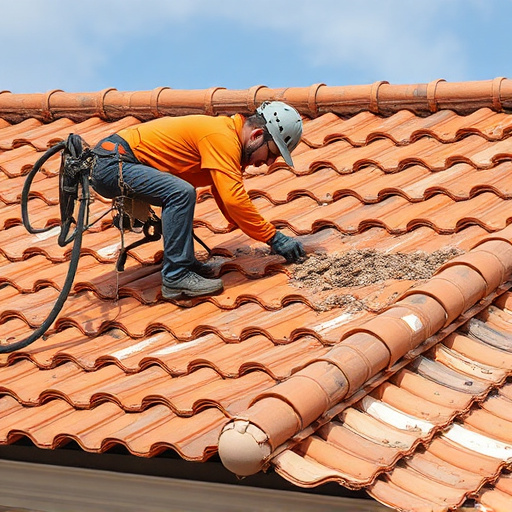
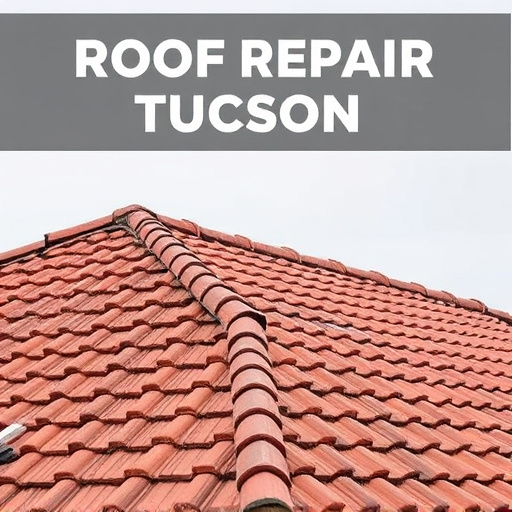
Tile itself lasts a very long time, but the tile is not the waterproof layer. The underlayment beneath it is, and in Arizona heat that layer usually wears out long before the tiles do. Typical repairs include replacing cracked or slipped tiles, resetting tiles lifted by wind, and replacing worn underlayment in a section (a “lift and relay”). Walking on tile without knowing where to step is also a common cause of cracks. See why a tile roof might be leaking and broken tile replacement on adobe and slump block homes.
Flat roofs: foam, coatings and built-up roofing
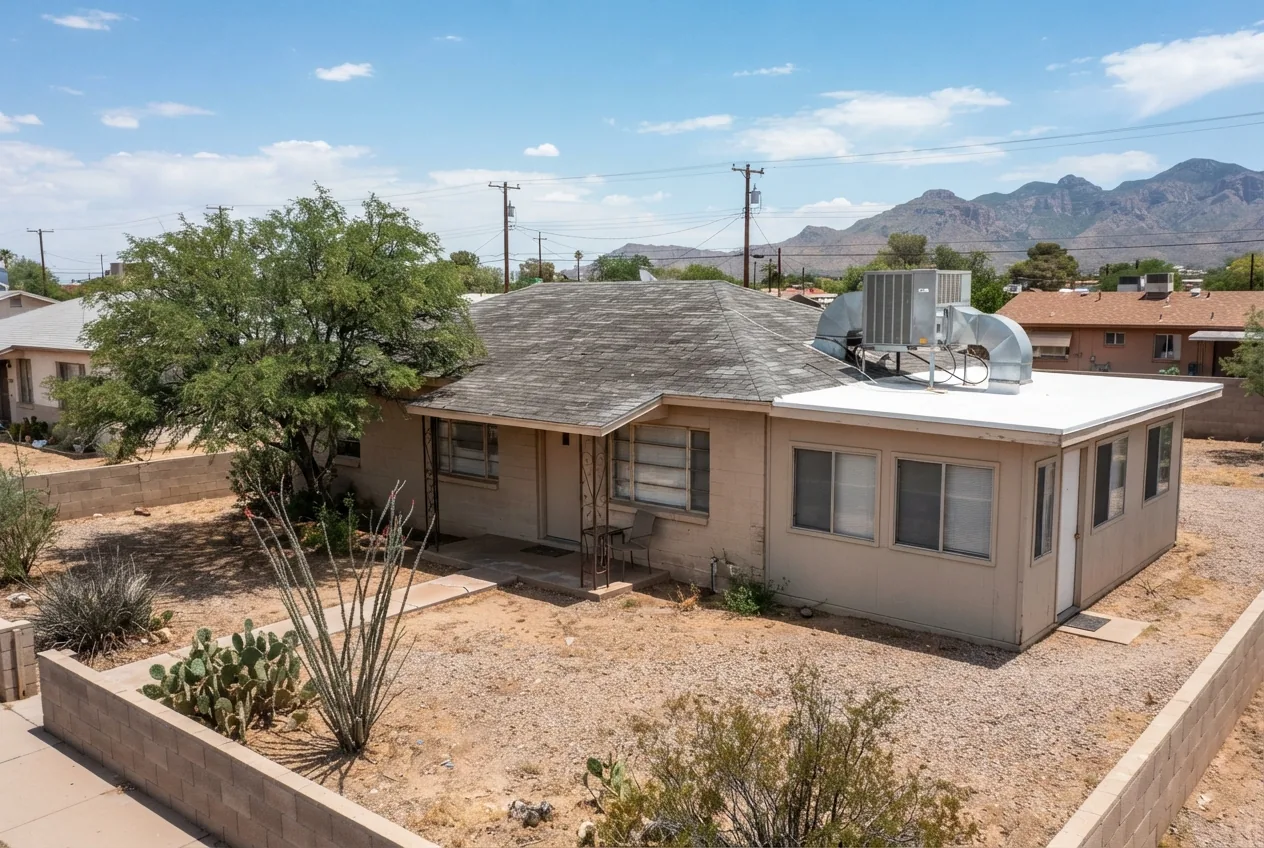
Many Tucson homes, especially older ranch and territorial styles, have low-slope roofs behind parapet walls. Spray foam and coated roofs depend on their top coating to block UV, and once that coating wears thin the foam underneath starts to erode. Built-up and rolled roofing develops blisters, cracks and open seams. Flat roofs also hold water when drains or scuppers clog or the surface sags, and standing water speeds up every other kind of wear. Typical repairs are recoating, patching blisters and seams, and fixing drainage. Read about flat roof problems west of Tucson near Kinney Road.
Asphalt shingle
Shingles in the desert lose their protective granules faster, turn brittle, and become easier for monsoon winds to lift or tear. Repairs usually mean replacing damaged or missing shingles, resealing lifted tabs, and checking the flashing around them. Widespread granule loss or curling across the whole roof is usually a sign the roof is near the end of its life rather than a repair job. See sun cracking and UV wear.
Where most leaks actually start
The roof surface in the middle of a slope rarely leaks first. Water gets in where the roof changes direction or something passes through it:
Flashing at walls, parapets, chimneys and valleys. When sealant dries out or metal flashing loosens, water runs behind it. See flashing repair.
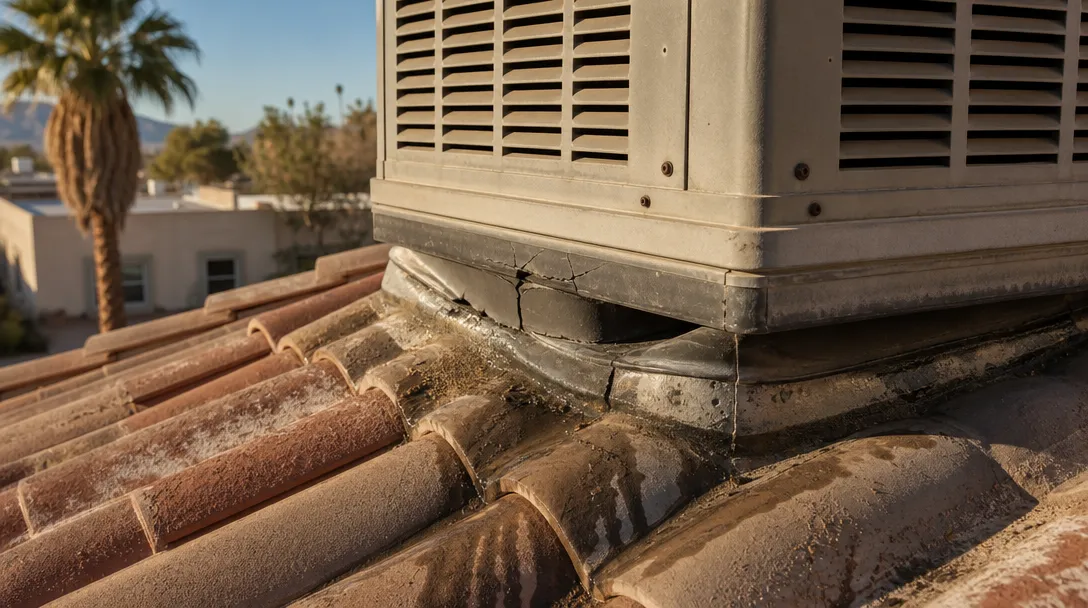
Swamp coolers and other rooftop equipment. Overflowing pans, corroded units and the curbs they sit on are a classic Tucson leak source. See swamp cooler leaks and roof damage.
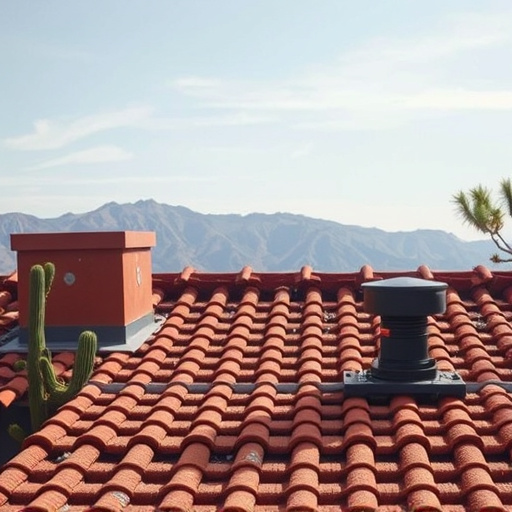
Vents and pipe penetrations, where rubber boots crack in the sun. Attic ventilation also affects how fast a roof ages. See ventilation repairs for hot climates.
Joints between old and new roofs at Arizona rooms, enclosed carports and additions, where two roofs built years apart meet. See finding leaks at additions.
Scuppers, canales and gutters that clog with debris and send water back onto the roof or down the wall. See gutter checks and maintenance.
A stain on the ceiling is often several feet away from the actual entry point, because water travels along decking and framing before it drips. That’s why a good repair starts with tracing the leak, not just patching the spot above the stain.
Repair or replace?
Most roofs with one or two leaks need a repair, not a new roof. A repair usually makes sense when the damage is limited to one area, the rest of the roof is in reasonable shape, and the cause is clear (a cracked tile, a failed flashing joint, a punctured coating). Replacement becomes the better value when leaks keep appearing in different places, the underlayment or decking is failing across large sections, or the roof is near the end of its expected life and repairs would only buy a season or two. If you’re getting conflicting advice, ask each contractor to show you photos of the specific problem and explain why it can or can’t be fixed in place.
After a monsoon storm
Stay off the roof while it’s wet or if you see sagging. Look from the ground and from inside the attic first.
Document everything with dated photos of the roof, ceilings, walls and any debris. You’ll want them if you file an insurance claim.
Limit the damage. Move belongings, catch drips, and if there’s an open hole, get it tarped. See emergency tarping after a storm.
Get it inspected before the next storm. Damage that only leaks a little the first time often gets worse quickly.
Check the license. Roofing contractors in Arizona must be licensed by the Arizona Registrar of Contractors, and you can look up any license number and its complaint history on the ROC site. Be cautious with door-to-door crews that show up right after a storm.
Get it in writing: what will be repaired, the materials, the price, and what the warranty covers and for how long.
Ask to see the problem. A trustworthy roofer will show you photos of the damage and the finished repair.
If you’d like to see how a local contractor lays out the repair process from inspection to final walkthrough, this Tucson roof repair service overview is a useful example of what to expect.
Arizona rooms, enclosed carports and additions put a seam in your roof. Here's why those joints leak in monsoon season and how to narrow down the source.