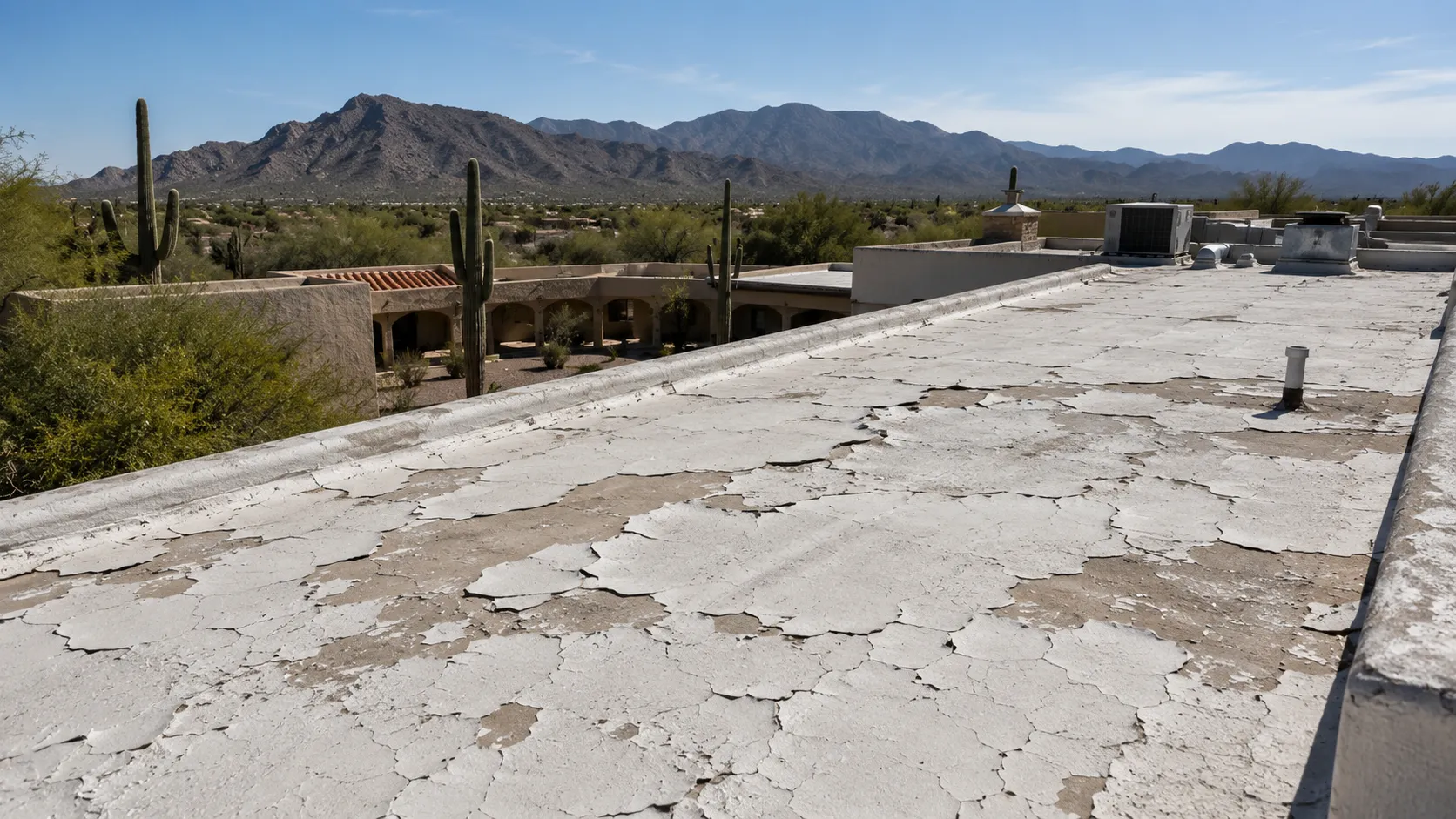
Why Flat Roof Damage Shows Up Months After the Real Cause
Most people think a roof leak starts when they see the water stain. It doesn't. The actual damage happened weeks or months earlier. You just didn't know yet.
Flat roofs hide problems better than any other roof type. A sloped roof sends water downhill fast. A flat roof holds it. Water pools in low spots, sits against seams, and slowly works its way under the membrane. By the time a stain shows up on your ceiling, moisture has already traveled through the substrate and into your building's structure.
How Tucson's Climate Creates a Slow Burn
Here's what we see constantly on flat roof repair jobs in West Tucson. A monsoon storm in July tears a small section of flashing loose near an HVAC curb or evaporative cooler penetration. The tear is tiny. Maybe a quarter inch. The homeowner never notices because the roof dries out fast in Tucson's heat, the interior stays dry for a while.
Then October hits. Temperatures drop at night but stay warm during the day. That thermal cycling pulls the tear open a little more each week. By December, the first light rain pushes water through. The owner calls us thinking the winter rain caused the leak. But the real cause was that monsoon storm five months ago.
We've pulled back membrane sections on older flat roofs near Starr Pass and along Ajo Way — and on homes along Kinney Road near Tucson Mountain Park — and found saturated insulation board underneath a surface that looked perfectly fine from above. The membrane wasn't torn. It had a failed seam that let moisture wick in slowly over an entire season. If your home is in that corridor, DC Roofing of Arizona covers exactly what flat and low-slope roofs in that area deal with.
The Hidden Damage Chain
Flat roof damage follows a pattern. Understanding it helps you catch problems earlier.
- An initial event creates a small breach. Wind lifts a membrane edge, UV degrades a coating thin spot, or foot traffic cracks a dried-out sealant around a pipe boot.
- Moisture enters but stays trapped between the membrane and the deck. It can't evaporate because the membrane seals it in.
- Trapped moisture breaks down adhesive bonds and rots wood decking or corrodes metal. The damage area grows outward from the original breach.
- Enough material fails that water finally reaches the interior. You see the stain. But the affected area is now much larger than the original problem.
This is why a small flat roof repair done early costs a fraction of what you'll pay after months of hidden moisture damage. And it's why regular roof inspections matter so much on flat roofs.
One thing most people don't realize: the stain on your ceiling is almost never directly below the leak source. Water travels sideways along deck boards and joists before it drops. We've traced leaks 10 or 15 feet from where the stain appeared. So pointing at a ceiling stain and saying "the leak is right there" usually sends you looking in the wrong spot.
If your flat roof is older than 10 years and you haven't had it inspected recently, there could be damage happening right now that won't show itself for months. A quick look from a qualified roofer can catch those small breaches before they turn into big repairs.
Signs Your Flat Roof Needs Attention Now
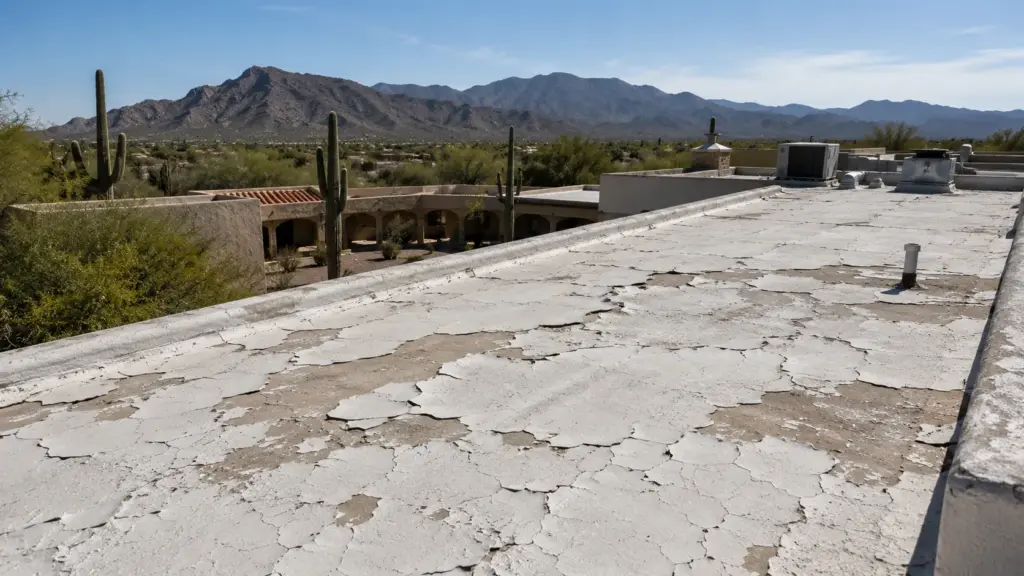
Most flat roof problems don't announce themselves with a dramatic leak in your living room. They start small. A soft spot you step on during a cooler inspection. A bubble in the membrane you didn't notice last month. By the time water shows up inside, the damage underneath has usually been building for weeks or even months.
We see this pattern constantly on flat roofs across West Tucson, especially on older homes near Starr Pass and along Ajo Way. The roof looks fine from the ground, the homeowner assumes everything's okay, and then one monsoon storm turns a minor issue into a major flat roof repair.
Here's what to watch for:
- Ponding water that stays more than 48 hours after rain. Flat roofs are designed to drain slowly, but standing water that lingers creates constant pressure on the membrane. It accelerates breakdown fast in Tucson's UV environment.
- Cracks, splits, or blisters in the roof surface. Thermal cycling is brutal here. Daytime temps above 110 degrees followed by 30-degree drops at night cause materials to expand and contract repeatedly. Over time, that stress shows up as visible damage.
- Dark stains or discoloration on interior ceilings. This usually means moisture has already made it through. Don't wait on this one.
- Flashing that's pulled away from walls or edges. Flashing seals the spots where your roof meets a wall, parapet, or penetration. When it separates, water has a direct path inside.
- Soft or spongy areas when you walk on the roof. This means the substrate underneath has absorbed moisture. The surface might look normal, but the structure is compromised.
One thing most people don't realize is that flat roofs in Tucson take more abuse than sloped roofs. A sloped roof sheds water and UV exposure hits at an angle. A flat roof sits there and absorbs everything directly. Flat and low-slope roofs require inspection at least twice per year to catch problems early.
And here's where it gets tricky. Evaporative cooler penetrations are one of the most common leak sources we find on flat roofs in Tucson. The metal platform sits on the roof, the lines run through it, and every connection point is a potential failure. If you have a swamp cooler on a flat roof, that area needs a close look at least once a year.
So how do you know if what you're seeing is a quick fix or something bigger? You can't always tell from the surface. A small crack might be surface-level. Or it might go all the way through the membrane into saturated insulation below. That's why a proper roof inspection matters before any flat roof repair work starts.
We had a homeowner near Tucson Estates who called about a "tiny bubble" on their flat roof. Turned out the entire northwest section had moisture trapped beneath the coating. What looked like a simple patch job was a section that needed to be cut out and rebuilt. Catching it when they did saved the rest of the roof.
If you've noticed any of these signs, don't guess at what's happening underneath. A free, no-obligation estimate from our team is one call away at (520) 979-9095.
Repair or Replace: How to Tell the Difference
This is the question we hear more than any other. You've got a leak, some bubbling, maybe a soft spot you can feel underfoot. So does your flat roof need a repair or a full replacement? The honest answer depends on a few things, not just what's happening on the surface.
Most flat roofs in West Tucson don't need to be torn off and replaced. We see homeowners assume the worst all the time. They call expecting bad news. But after a roof inspection, we often find the damage is limited to one area. A targeted flat roof repair handles it.
Signs That Point to Repair
Flat roof repair makes sense when the damage is contained. Here's what that usually looks like:
- One or two isolated leaks near a penetration point like an evaporative cooler mount or a vent pipe
- Small cracks or splits in the membrane that haven't spread across the roof
- Ponding water in a single low spot that can be corrected with patching or a coating
- Flashing that's pulled away from a parapet wall on one side of the roof
If the underlying deck is still solid and the membrane is intact everywhere else, repair is the right call. We tell you what your roof needs. Nothing more.
Signs That Point to Replacement
Replacement becomes the better option when problems are widespread. Think of it this way. If you're patching five or six spots on the same roof, those patches start costing more than just doing it right once.
A few things push a roof into replacement territory. Widespread membrane failure across more than 25 percent of the surface is a big one. Saturated insulation underneath the membrane is another, because once that insulation holds water, it won't dry out and it won't insulate. Trapped moisture in roofing insulation is one of the leading causes of premature roof system failure. Multiple previous repairs layered on top of each other can also mean the roof has reached the end of its useful life.
And age matters. A flat roof that's 20-plus years old with recurring issues is telling you something.
The Tucson Factor
Here's what makes this decision different in Tucson. Our UV exposure is extreme. The sun breaks down roofing materials faster here than in most of the country. Thermal cycling stresses every seam and every piece of flashing on your roof, day after day, year after year. Monsoon season dumps heavy rain on surfaces that just baked at 110 degrees hours earlier.
We've worked on older flat roofs near Starr Pass and throughout the west side where the original membrane looked fine from the ground. But up close, the material was brittle and crumbling. That's a roof that needs more than a patch.
The real trick is getting an honest assessment. Not every contractor will tell you a repair is enough when a replacement pays them more. The FTC offers guidance on avoiding home improvement scams that's worth a quick read before you sign anything. That's why David comes out personally for every estimate. You're getting a straight answer from the person who owns the company.
If you're not sure where your flat roof stands, call us at (520) 979-9095 for a free estimate with no obligation. Most people feel relieved after the inspection. The answer is usually simpler than they expected.
Frequently Asked Questions
Common questions about flat roof repair in West Tucson
How do I know if a flat roof leak is something I can handle myself or if I need a professional?
Call a professional if you see soft spots, bubbling, or water stains inside your home. These signs mean moisture has already moved past the surface and into the deck below. Surface patches you do yourself often trap moisture instead of removing it, which makes hidden damage worse. A trained roofer can check the substrate, not just the top layer, and find the real source before it spreads further under your flat roof.
What's the biggest misconception homeowners have about flat roof leaks?
The biggest misconception is that the leak is directly above the ceiling stain. Water on a flat roof often travels sideways along deck boards and joists before it drips down inside. We've traced leaks 10 to 15 feet from where the stain first appeared. If you're chasing a leak based only on where the stain shows up, you're likely searching in the wrong spot on your West Tucson roof.
How does Tucson's climate make flat roof damage worse?
Tucson's climate speeds up flat roof damage through extreme daily temperature swings. Daytime heat above 110 degrees followed by cooler nights causes materials to expand and contract constantly. This thermal cycling pulls at small tears and weak seams until they open wider. Add in intense UV exposure and sudden monsoon storms, and small breaches from summer can turn into interior leaks by winter, months after the original damage occurred.
How often should a flat roof be inspected in West Tucson?
Flat roofs should be inspected at least twice a year. Spring and fall checks work best in Tucson, falling right before monsoon season and right after summer heat has stressed the membrane. Homes with evaporative coolers on the roof should add a yearly check around that unit too.
Why does standing water damage a flat roof even if it dries out fast?
Standing water damages a flat roof because it puts constant pressure on the membrane, even during short periods. If it sits for more than 48 hours after rain, that pressure combined with Tucson's strong UV rays speeds up breakdown of the surface. The roof may look dry and fine within a day, but repeated ponding weakens seams over time. This is one reason regular checks matter more than a quick glance from the ground.
What are the most common causes of flat roof leaks in West Tucson homes?
The most common causes are failed flashing, cracked pipe boots, and evaporative cooler penetrations. Every connection point around a swamp cooler platform is a possible failure spot, and these areas need yearly attention. Small seam failures near HVAC curbs are another frequent cause we find on flat roofs near Starr Pass and along Ajo Way.
Ready to Get Started?
Call +1-520-979-9095 now for a free estimate.