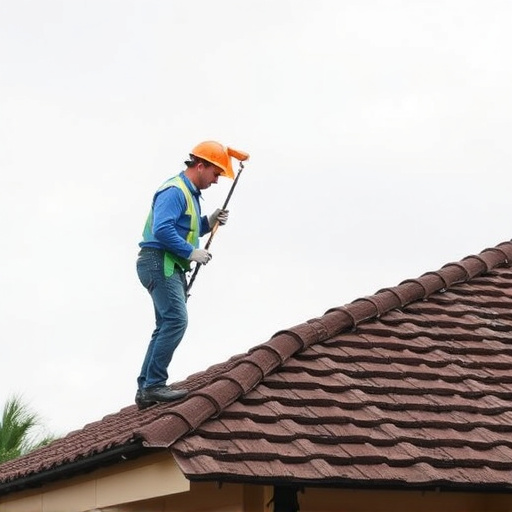
After severe storms, immediate Roof Repair Tucson involves assessing damage, installing emergency tarps with specialized hardware for temporary protection, and ensuring a tight fit to prevent wind lift. Final inspection verifies tarp integrity until permanent repairs can be made. Safety protocols include PPE and proper ladder placement.
In the face of severe weather, Tucson residents often find themselves grappling with storm damage, particularly to their roofs. The immediate concern post-storm is not only assessing structural integrity but also providing temporary protection against further harm and intrusion. Emergency tarp installations emerge as a crucial solution for Roof Repair Tucson, offering a rapid, effective shield while more permanent repairs are arranged. This article delves into the intricacies of these critical interventions, exploring their benefits, best practices, and the expertise required to ensure both immediate safety and long-term roof longevity.
- Assessing Tucson Roof Damage Post Storm: Emergency Tarp Installation Guide
- Step-by-Step: Efficient & Safe Tarp Application for Roof Repair Tucson
Assessing Tucson Roof Damage Post Storm: Emergency Tarp Installation Guide

After a severe storm hits Tucson, assessing roof damage is crucial before considering emergency tarp installations. As a roofing expert in the region, we’ve seen firsthand the varied impacts of storms ranging from powerful winds to torrential downpours. The initial assessment should focus on structural integrity, identifying leaks, and visualizing overall damage. Look for missing shingles, damaged gutters, or signs of water intrusion—these are key indicators requiring immediate attention. Regular inspections can help in recognizing potential vulnerabilities before they escalate into major repairs.
Emergency tarps serve as a temporary solution to shield your home from further weather-related damage while you organize permanent Roof Repair Tucson services. It’s vital to understand that a tarp isn’t a long-term fix; it provides breathing space for property owners to arrange materials and schedule skilled technicians. When installing an emergency tarp, ensure a tight fit around the perimeter of the roof, securing it with strong clips or staples. This prevents wind from lifting the tarp and causing additional harm.
The process involves several steps: first, remove any debris from the roof surface and gutters to prevent damage to the tarp during installation. Then, measure the area requiring coverage and cut the tarp accordingly. Secure the edges with proper fastening mechanisms, ensuring no openings are left exposed. Lastly, inspect the entire tarp setup for any tears or weak spots before finalizing the installation. Remember, while an emergency tarp offers protection, it’s only a temporary fix until comprehensive Roof Repair Tucson is carried out.
Step-by-Step: Efficient & Safe Tarp Application for Roof Repair Tucson

When severe storms hit Tucson, emergency tarp installations become a crucial step in protecting homes from further damage. This process, while seemingly straightforward, requires careful consideration and expert execution to ensure both effectiveness and safety. A professional Roof Repair Tucson service provider can guide homeowners through this temporary fix, offering a secure barrier against the elements until permanent repairs can be made.
The first step involves assessing the scope of the damage, identifying areas where leaks or structural integrity issues have occurred. Once these problem spots are pinpointed, the tarp application begins. Professionals use high-quality tarps designed to withstand harsh weather conditions, carefully securing them over damaged sections using specialized hardware like clips and staples. This process requires a keen eye for detail; improper installation can lead to further complications, including water infiltration and potential safety hazards.
Next, sealing the perimeters of the tarps is paramount. This involves creating a tight fit around roof edges, vents, and other openings to prevent water from seeping in through any gaps. By using weather-resistant sealants and reinforcing the edges with additional clips or staples, Roof Repair Tucson experts ensure maximum protection. Throughout the installation process, safety should be at the forefront of every decision. This includes donning appropriate personal protective equipment (PPE), such as gloves and hard hats, and ensuring proper ladder placement for workers accessing high areas.
Finally, after the tarp is securely in place, a thorough inspection is conducted to verify its integrity. This step involves checking all connections, looking for any loose tarps or exposed areas, and ensuring that all vents are properly sealed. By implementing these meticulous steps, homeowners can have peace of mind knowing their Tucson roofs are protected from further storm damage until a permanent fix can be arranged.
In light of the above discussions, emergency tarp installations for Roof Repair Tucson post storm damage are crucial steps to protect properties from further deterioration. By following a structured assessment process and adhering to safe application methods, residents can mitigate risks and ensure immediate relief until permanent repairs are made. The step-by-step guide emphasizes efficiency and safety, empowering homeowners with the knowledge to take swift action during challenging times. Key insights include prioritizing storm damage assessment, selecting suitable tarps, securing them properly, and understanding when professional help is necessary. These practical takeaways from this authoritative article equip readers with valuable tools to navigate Roof Repair Tucson situations effectively.